Radon Mitigation Systems
Active sub-slab and sub-membrane depressurization for Pikes Peak region basements, slabs, and walkouts, built to ANSI/AARST SGM-SF-2023 by Colorado-licensed pros.
Typical$1,200-$2,600
El Paso County homes average 5.4 pCi/L, above the EPA action level before your house is even tested. Every system here is installed by a Colorado-licensed, NRPP or NRSB certified local pro and verified with a post-install retest.
Step 1
A short call or text: your test result if you have one, your foundation type, and any deadline you are working against. Plain answers, no script.
Step 2
A Colorado-licensed mitigation pro walks the foundation, runs diagnostics where the slab is in question, and writes one fixed price with the license number on it.
Step 3
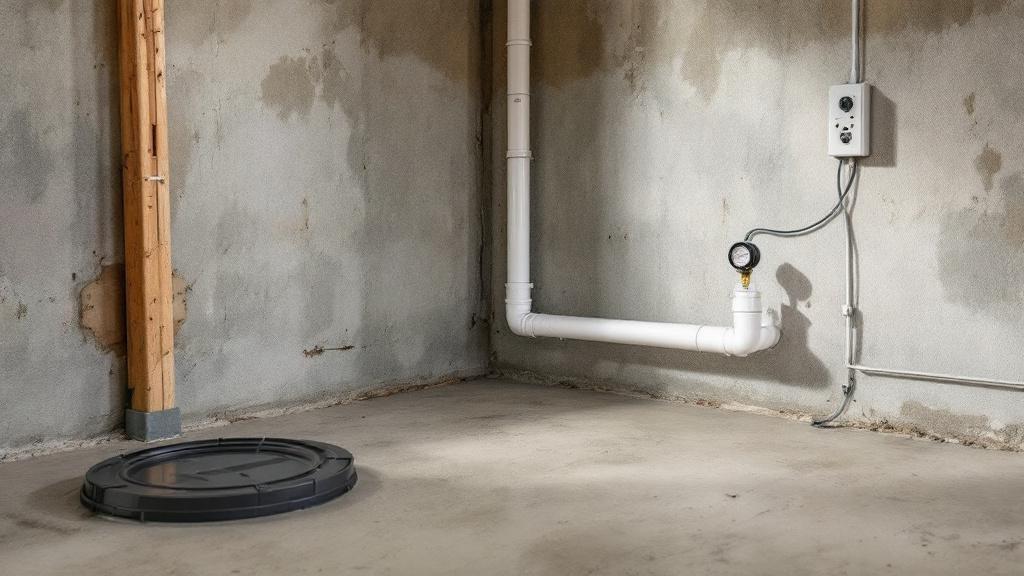
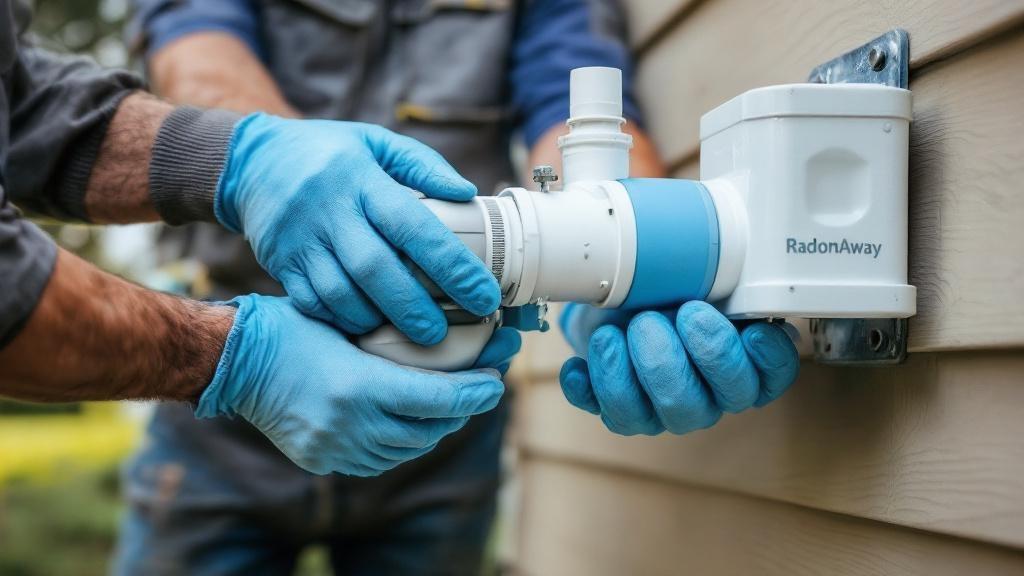
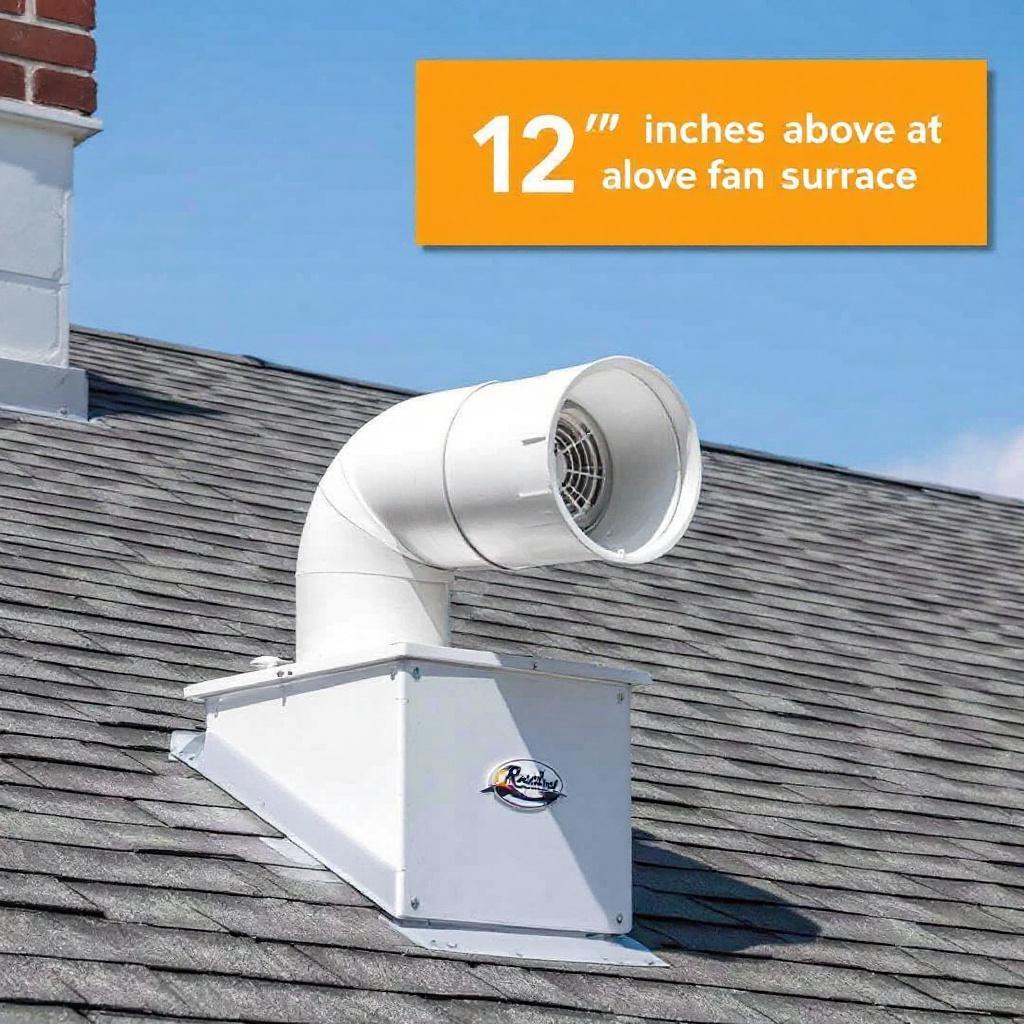
Most Pikes Peak basements and slabs finish in a day: suction point, sealed entry routes, fan outside the living space, discharge above the eave, gauge marked at startup.
Step 4
After the fan has run at least 24 hours, a 48-hour closed-house retest proves the number moved. The written result is yours for the house records.
Average El Paso County radon test result in Air Chek lab data reported by UCHealth. The EPA action level is 4.0.
Source: UCHealth
Share of Colorado homes that test above the 4.0 pCi/L action level; the statewide average runs about 6.4 pCi/L.
Colorado counties CDPHE classifies as high radon risk after its 2014 measurement survey: all of them, El Paso and Teller included.
El Paso and Teller counties are both designated EPA Radon Zone 1, the highest-potential tier.
About half of Colorado homes test above the EPA action level, and CDPHE classifies all 64 Colorado counties as high radon risk.
El Paso County radon tests average 5.4 pCi/L in Air Chek lab data, with the Colorado statewide average near 6.4 pCi/L.
Uranium-bearing granite and granite-derived soils of the Front Range, including the Pikes Peak region, drive elevated geologic radon potential.
Colorado has required a state license for radon measurement and mitigation professionals since July 1, 2022, under C.R.S. Title 12, Article 165.
Colorado test data places the state among the highest-averaging radon states in the country.
Every job comes with a written quote and no-pressure consultation. Workmanship warranty terms are set by your lead technician and confirmed before work begins.
Active sub-slab and sub-membrane depressurization for Pikes Peak region basements, slabs, and walkouts, built to ANSI/AARST SGM-SF-2023 by Colorado-licensed pros.
Short-term, long-term, and real-estate radon measurement across El Paso and Teller counties, run by Colorado-licensed measurement pros.
Sub-membrane depressurization for dirt crawl spaces in older Springs neighborhoods and mountain homes up the Ute Pass corridor.
Testing and mitigation scheduled backward from inspection objection deadlines, closing dates, and PCS report dates.
Multifamily buildings, daycares, offices, and schools across El Paso and Teller counties, designed under the large-building standards.
Fan replacement, gauge and alarm fixes, resealing, and retests for radon systems that have stopped doing their job.
The mountain this city is named for is a 1.4-billion-year-old granite batholith, and granite carries trace uranium. As that uranium decays through radium, it produces radon gas continuously, everywhere the rock and its weathered remains sit, which in this region is nearly everywhere: the batholith itself under the west side and the mountain towns, and the granite-fed sediments under the mesas and plains east of I-25. The USGS documented the pattern in its geologic radon assessment of this part of the country.
The measurements agree with the geology. Air Chek lab data reported by UCHealth puts the average El Paso County result at 5.4 pCi/L, above the EPA's 4.0 action level before any particular house enters the conversation. Statewide, about half of Colorado homes test over the action level, the average runs near 6.4, and CDPHE classifies all 64 counties as high risk. The EPA's older zone map says the same thing in fewer words: El Paso and Teller are both Zone 1.
What none of those numbers can do is grade your address. Houses two doors apart read far apart all the time, because entry depends on each foundation's particulars. The regional data earns exactly one conclusion, and it is the one this site repeats: test your house, because nothing else here is exempt by location.
Until recently, anyone with a truck and a sawzall could sell radon mitigation in Colorado. That ended on July 1, 2022, when C.R.S. Title 12, Article 165 took effect: radon measurement and mitigation performed for pay now require a state license from DORA's Office of Radon Professionals, issued on top of a current NRPP or NRSB certification. The license brings the national ANSI/AARST standards with it, which govern fan placement, discharge height, pipe sizing, labeling, and the monitor every system carries.
For homeowners the change is leverage. Every quote should carry a license number, and the number can be verified on DORA's lookup in about a minute; a professional who will not provide one has answered your real question. The era before licensing also left artifacts across the region, systems with basement-mounted fans, ground-level discharges, or no gauge at all, and any of them is worth a check against the current standard.
All contractors you work with here are licensed under the Colorado law, certified by NRPP or NRSB, and insured. Our licensing FAQ covers the law, and the verification steps take five minutes before you sign anything with anyone, us included.
Colorado Springs real estate runs on deadlines twice over: the inspection objection dates in a standard Colorado contract, and the PCS orders that move thousands of military households through Fort Carson, Peterson, Schriever, and the Academy every year. Radon fits inside both when it is handled early and badly when it is discovered late.
The working pattern for buyers: order the radon test alongside the general inspection so its 48 hours run in parallel, and treat a high result as a priced negotiation item rather than a crisis, because the fix has a known cost and a one-week cycle. For sellers, testing before listing converts the issue from a surprise into paperwork: either a passing result in the file, or a system installed on your own schedule with its verification retest attached. Colorado's seller disclosure asks what you know about radon, so what you know should be documented and resolved, not resisted.
When a deal is already in motion and the number just came back high, speed is the service: scope visit within days, one-day install, 24 hours of fan runtime, 48-hour verification, written results to both agents. The real estate radon service exists for that calendar, and the PCS timeline FAQ maps the military version.
The EPA attributes about 21,000 US lung cancer deaths a year to radon, the second-leading cause after smoking and the leading cause among people who never smoked. The risk model is cumulative: dose equals concentration times years, with no symptoms along the way and no acute threshold where harm begins. That shape is worth understanding because it sets the right emotional pitch, which is urgency without panic.
A high test result is not an emergency. Nobody needs to sleep elsewhere tonight, and nothing about a week of scheduling changes the health math. What the math does punish is the decade of doing nothing: at the county's average concentration, years of exposure accumulate real risk, and they accumulate fastest for smokers, whose radon risk multiplies rather than adds, and for whoever sleeps on the lowest level, where concentrations run highest. Children's basement bedrooms deserve the first test for exactly that reason.
The same cumulative shape makes the fix unusually satisfying: from the day a system's retest confirms a low number, the accumulation stops. A one-day install and a $100 a year of fan electricity buy indoor air at a fraction of the prior concentration, permanently and measurably. The diagnosis page sorts out where your household sits and what to do first.
Once the verification retest comes back low, the system asks very little: a glance at the manometer when you pass it, a retest every two years, and a fan swap when the fan's time comes. The gauge is the whole daily interface. Fluid held apart at roughly its startup mark means suction; fluid gone level means the fan has stopped and the system is decorative until someone notices.
Front Range conditions add two seasonal habits. After heavy snow, confirm an exterior discharge has not drifted over or iced shut, particularly on mountain homes where a sidewall run meets real snowpack. And treat new noise as information: a gurgle is condensation pooling in a flattened pipe run, a rattle is a coupling or mount, a grind is bearings announcing retirement. All three are cheap fixes while the fan still runs and a protection gap once it stops.
Renovations are the other standing rule. Anything that cuts the slab, trenches the perimeter, finishes the basement, or changes HVAC can shift the pressure picture the system was designed around, so the project that touches the foundation ends with a retest. When the gauge, the noise, or the retest says something changed, the repair service covers fans, seals, membranes, and gauges, and brings pre-2022 systems up to the current standard while it is there.
Colorado Springs and the Pikes Peak region and surrounding communities. Same-day estimates within 11+ neighborhoods.
Most Pikes Peak region homeowners hear back the same business day. Every install is performed by a Colorado-licensed, NRPP or NRSB certified mitigation pro and finished with a verification retest.
Browse all 50 questions for more depth.
Most basement and slab homes in the Pikes Peak region land between $1,200 and $2,600 for an active sub-slab system. Dirt crawl spaces needing a sealed membrane run $1,900 to $3,600. A licensed short-term test is $150 to $300.
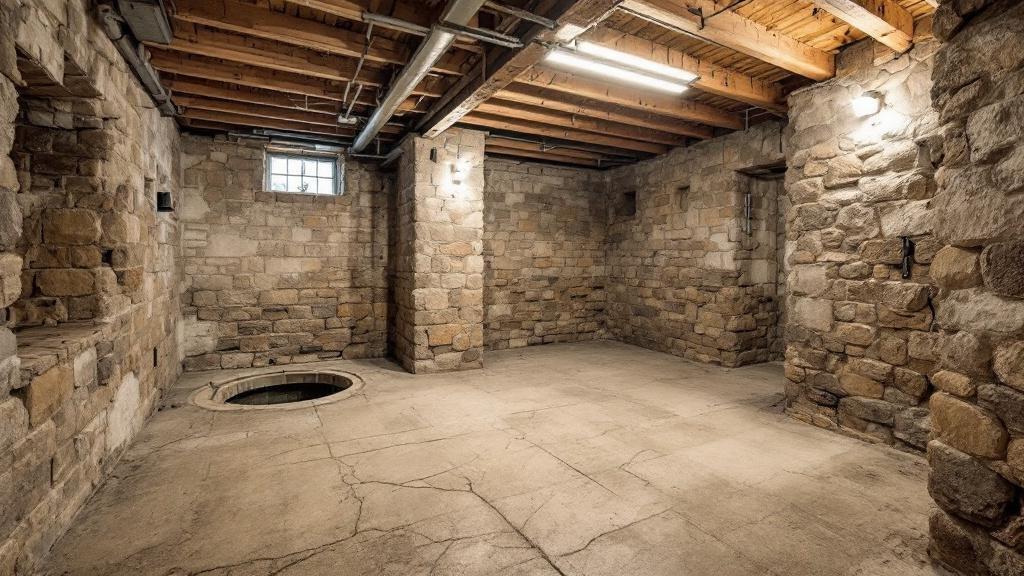
What moves a quote inside those bands is the house, almost never the address. A 2005 Briargate two-story with a poured basement and a clean chase to the attic prices near the bottom. A hillside walkout in Rockrimmon where the discharge has to clear a stepped roofline, or an Old North End foundation of rubble stone that drinks sealant, prices near the top. Add a second suction point when diagnostics show the slab does not communicate end to end, or a membrane when part of the house sits over dirt. Every quote is fixed and written after someone looks at the foundation, and it lists the Colorado license number of the pro responsible. The cost guide breaks down each tier, and the calculator gives a starting range.
One working day for most single-suction systems in a basement or slab home. Crawl space membranes and mixed foundations can stretch to two. The verification retest runs at least 48 hours after the fan has been on for a day.
The calendar around the install day is what homeowners underestimate. Before it: a look at the foundation and a written fixed quote, which can usually happen within a few days of the first call. After it: the fan runs at least 24 hours before the retest starts, and the retest itself needs 48 hours of closed-house conditions, so the full proof takes about four days from the first hole cored. Winter weather rarely interferes, since nearly all the work happens indoors and the exterior portion is a few hours of pipe and wiring. If a closing date or a report date is driving things, say so up front; the whole sequence gets planned backward from it, and the real estate service exists for exactly that squeeze.
Yes, and measurably. Lab data reported by UCHealth puts the average El Paso County test at 5.4 pCi/L, above the EPA action level of 4.0. About half of Colorado homes test above that level, and the statewide average runs near 6.4.
The EPA's 1993 radon map already placed El Paso and Teller counties in Zone 1, its highest tier, and Colorado's own health department went further: after a 2014 measurement survey, CDPHE classifies all 64 Colorado counties as high radon risk. The driver is under your feet. The Pikes Peak batholith and the sediments weathered off it carry uranium, documented in the USGS geologic radon assessment for this region, and uranium's decay chain produces radon gas wherever the rock sits. None of this condemns any particular house; it means no house here gets to assume it is fine. A test kit costs less than a pizza and answers the question for your address. See why the Pikes Peak region runs high.
Geology. Granite and granite-derived soils carry trace uranium, and uranium decays through radium into radon gas. The Pikes Peak granite and the sediments shed from it sit directly under this region, documented in the USGS radon assessment.
The USGS geologic radon potential study for this part of the country traces elevated indoor radon along the Front Range to uranium-bearing crystalline rock and the arkosic sediments derived from it. Around Colorado Springs that means the Pikes Peak batholith itself on the west side, and the granite-fed formations underlying the mesas and plains to the east. Weathered granite breaks down into coarse, gravelly soil that gas moves through easily, so the radon generated at depth actually reaches foundations instead of dying in place; radon's half-life is under four days, so permeable soil is what turns source rock into an indoor problem. Dry soils and a long heating season finish the job by letting houses pull gas in for months at a stretch. The granite geology post goes deeper.
A radioactive gas produced wherever uranium in rock and soil decays. It is invisible, odorless, and tasteless, and it accumulates in the lowest levels of buildings. Long-term exposure is the second-leading cause of lung cancer in the United States.
Radon itself is inert, but its short-lived decay products are not: breathed in, they lodge in lung tissue and release radiation as they continue to decay. The EPA attributes about 21,000 US lung cancer deaths a year to radon exposure, and it is the leading cause among people who have never smoked. Outdoors it disperses harmlessly, averaging about 0.4 pCi/L. Indoors, a foundation sitting on uranium-bearing ground acts like a collection chamber, which is why the same gas that is trivial in your backyard can be a problem in your basement. There are no symptoms, no smell, and no warning; measurement is the only detection method that exists. A test is the whole diagnostic.
Zone 1 is the EPA's highest radon-potential tier: counties where the predicted average indoor screening level exceeds 4 pCi/L. Both El Paso and Teller counties carry it. CDPHE now rates all 64 Colorado counties high risk regardless.
The EPA map dates to 1993 and was built from geology, aerial radioactivity surveys, soils, and the indoor measurements available then. Its own caveat is printed on it: the map characterizes counties, not houses, and should never be used to decide whether an individual home needs testing. Colorado's measurement record since then has only strengthened the conclusion; CDPHE's 2014 survey led the state to classify every county as high risk, meaning the distinction between Zone 1 and anywhere else in Colorado no longer changes the advice. For this service area the takeaway is simple and short: the question was settled at the county scale decades ago, and the only open question left is your own address. The community table shows the local picture.
Yes. Since July 1, 2022, Colorado law has required a state license for anyone performing radon measurement or mitigation for compensation, issued by DORA's Office of Radon Professionals on top of NRPP or NRSB certification.
The law is C.R.S. Title 12, Article 165, created by HB21-1195. It ended an era when radon work in Colorado was anyone-with-a-truck territory, and it created two license types: radon measurement professional and radon mitigation professional. Getting either requires holding a current national certification from NRPP or NRSB first, so the state license stacks a legal requirement on top of the proficiency credential rather than replacing it. Homeowners working on their own houses are exempt, as owner exemptions almost always run, but the moment money changes hands the license applies. All contractors you work with here are licensed under that law and certified by NRPP or NRSB. Verify any license at DORA's lookup; the how-to FAQ shows the steps.
Ask for the license number, then look it up through DORA's Office of Radon Professionals, the licensing body for radon work in Colorado. A current NRPP or NRSB certification number can be verified in those registries the same way.
Three checks, five minutes. First, the state license: DORA's professional lookup shows whether a radon measurement or mitigation license is active and whether discipline is on file. Second, the national credential behind it: NRPP and NRSB both run public registries searchable by name or certificate number. Third, the quote itself: a legitimate Colorado quote names the licensed professional responsible for the job, and a quote without a license number on it is telling you something. Be wary of a tester who quotes a suspiciously convenient result and then offers to sell the fix in the same breath; separating measurement from mitigation, or at least getting the conflict in writing, keeps the number honest. Our hiring guide post covers the full vetting list.
El Paso County homes average 5. Mon-Sat 8am-6pm.