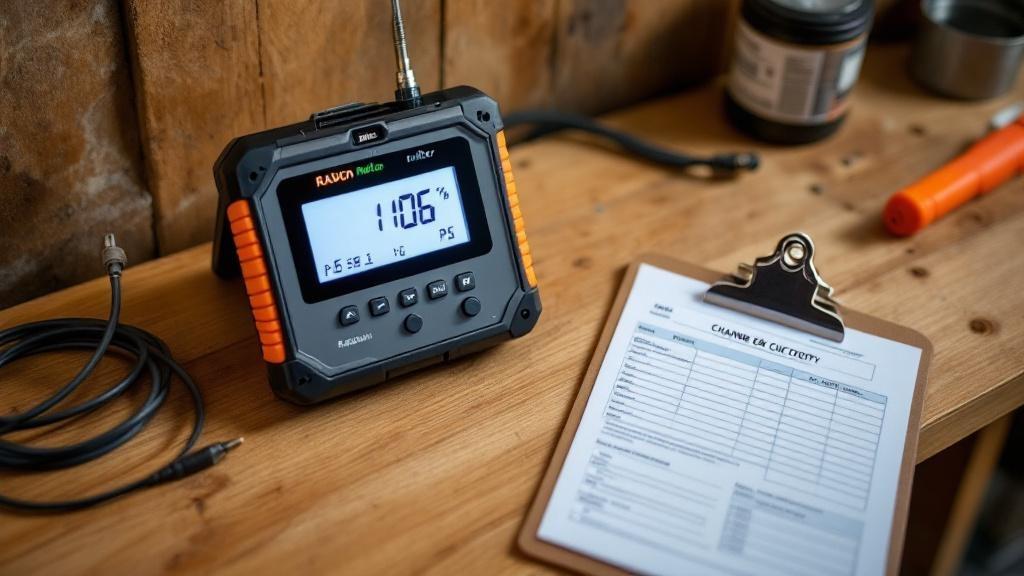
What this service covers
Measurement for every situation a Pikes Peak homeowner meets: a first screening, a check before finishing a basement, a post-mitigation verification, or a purchase contract on a deadline. Colorado has licensed radon measurement professionals through DORA since July 2022, and every paid test here is run under that license, with a written report you can hand to an agent, a lender, or the next owner.
Typical pricing
$150-$300
Pricing varies by job specifics. Free phone or on-site quotes; fixed pricing once the technician has assessed the job.
The numbers that make testing non-optional in El Paso County
Colorado tests high as a state, and this county tests high within the state. Lab data compiled by Air Chek and reported by UCHealth puts the average El Paso County result at 5.4 pCi/L, above the EPA action level of 4.0 before any individual house is considered. Statewide, roughly half of Colorado homes test above 4.0, and the state average runs about 6.4 pCi/L.
The EPA's 1993 map placed both El Paso and Teller counties in Zone 1, its highest-potential tier, and CDPHE went further after its own 2014 measurement survey: every one of Colorado's 64 counties is now classified high risk. There is no low-radon town in this service area, no neighborhood exempt by age or price, and no foundation type that rules it out.
What averages cannot do is predict a single address. Two houses on the same Briargate street can read 2 and 12 because of a crack pattern, a sump, or a crawl under an addition. The county average is a reason to test; your own result is the only reason to act. Start with the diagnosis page if you are not sure which test you need.
Picking between a 48-hour snapshot and a season-long average
A short-term test, two to seven days for most devices, answers the question quickly and is the only practical option inside a purchase contract. A continuous radon monitor adds hour-by-hour data, which shows whether a result was steady or driven by one windy night, something that matters in a region where a chinook can swing the weather 40 degrees in a day.
A long-term test, more than 90 days with an alpha-track detector, comes closest to the annual average that the EPA's risk estimates are actually built on. It is the right tool for a borderline first result, especially one taken in summer, because levels in a closed, heated house usually run higher than the same house reads in July. A device placed in October and collected in February captures the season that matters.
Both kinds follow the same placement discipline: the lowest level someone regularly uses, away from exterior walls, drafts, and heat sources, with doors and windows kept closed for short tests. For a sale, the measurement must stand up to scrutiny, which is what a licensed test with a tamper log provides. The kit-versus-pro comparison covers when each is the right call.
What to do with the number on the report
Under 2.0 pCi/L: file the report and retest in a couple of years, or sooner after a renovation, a new furnace, or someone moving into a lower-level bedroom. The EPA puts average outdoor air at about 0.4 pCi/L, so no house reads zero.
Between 2.0 and 4.0: the EPA says consider fixing, because risk does not switch off below the action level. The honest move in this band is a second, longer test across the heating season before spending money. Plenty of Pikes Peak homes that read 3 in August read 6 in January, and the winter number is the one your family actually breathes.
At 4.0 or above: fix the house. Not tonight, and not in a panic, because radon harm accumulates over years rather than days, but this season. A mitigation system is a one-day install on most foundations here, and the post-install retest closes the loop. If the result arrives during a sale, deadlines compress everything; the real estate service is built for that calendar.
Service area
Radon Testing is available across Colorado Springs and the Pikes Peak region. Per-suburb pages: